


Force.com Platform Fundamentals
 j
jNewer Version Available
A Multitenant Architecture
In a multitenant architecture, all users share the same infrastructure and the same version of the Force.com platform. In contrast to their single-tenant counterparts, such as client-server enterprise applications or email servers, multitenant architectures release upgrades automatically and simultaneously for all users. Consequently, no one has to worry about buying and maintaining their own physical stack of hardware and software, or making sure that their applications always have the latest patch installed.
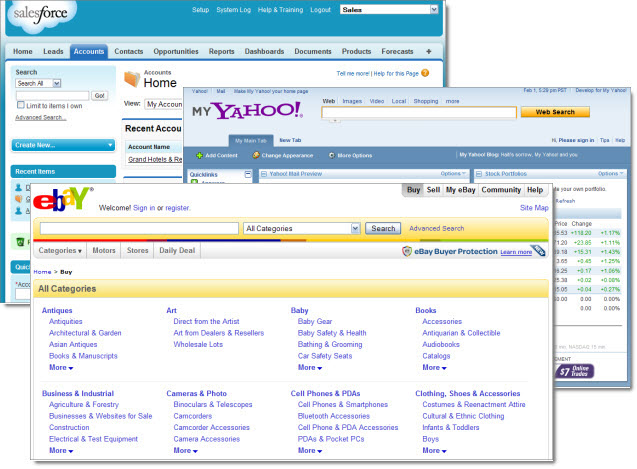
Besides the Force.com platform, several popular, consumer-based applications also use a multitenant architecture, including eBay, My Yahoo!, and Google Gmail. Multitenant architecture allows these applications to be low-cost, quick to deploy, and open to rapid innovation—exactly the qualities for which Salesforce has also become known.
The platform's multitenant architecture also impacts how developers use the platform to create new applications. Specifically, it defines a clear boundary between the platform and the applications that run on it. A boundary is important because it allows applications to define their own components without jeopardizing the functionality of the core platform or the data stored by other users.