Platform Events Developer Guide
 j
jNewer Version Available
Event-Driven Software Architecture
An event-driven (or message-driven) software architecture consists
of event producers, event consumers, and channels. The architecture is suitable for large
distributed systems because it decouples event producers from event consumers, thereby
simplifying the communication model in connected systems.
- Event
- A change in state that is meaningful in a business process. For example, a placement of a purchase order is a meaningful event because the order fulfillment center requires notification to process the order. Or a change in a refrigerator’s temperature can indicate that it needs service.
- Event message
- A message that contains data about the event. Also known as an event notification.
- Event producer
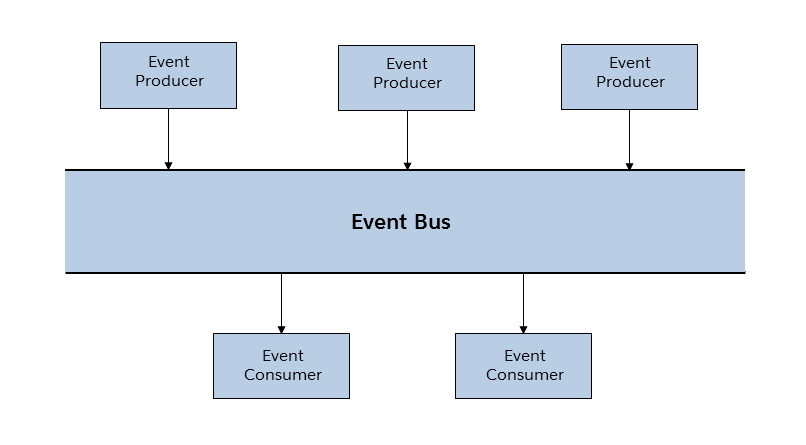
- The publisher of an event message over a channel.
- Channel
- A conduit in which an event producer transmits a message. Event consumers subscribe to the channel to receive messages. Also referred to as event bus in Salesforce.
- Event consumer
- A subscriber to a channel that receives messages from the channel.
Systems in request-response communication models make a request to a web service or database to obtain information about a certain state. The sender of the request establishes a connection to the service and depends on the availability of the service.
In comparison, systems in an event-based model obtain information and can react to it in near real time when the event occurs. Event producers don’t know the consumers that receive the events. Any number of consumers can receive and react to the same events. The only dependency between producers and consumers is the semantic of the message content.
The following diagram illustrates an event-based software architecture system.