


 j
Get Started with Insurance Developer Resources
Endorse Policy
Issue Policy
Renew Policy
Create Out of Sequence Policy Endorsement
Issue Multi-Root Policy
Endorse Multi-Root Policy
Renew Multi-Root Policy
Cancel Policy
Previous PDF Versions
Perform a backdated change on a policy in the past, current, or future policy term, even when another policy version with an effective date later than the endorsement date already exists. The impacted policy versions are canceled and replaced with new, repriced versions that include the change. The premium impact for each affected policy term is captured in an individual out-of-sequence endorsement transaction.
Make sure you have the following details.
Example
If a policy has three active versions (V1, V2, and V3) within a single term, and you need to make a change from an effective date which lies in the tenure of V2. You can prepare the context for out-of-sequence endorsement using the Rating API. Get the context from policy V2 and pass this context to the patch rating API. Make additions, deletions, or updates to generate an updated context and then pass this context to out-of-sequence endorsement request.
This diagram outlines the sequence for creating an out-of-sequence policy endorsement without using a quote.
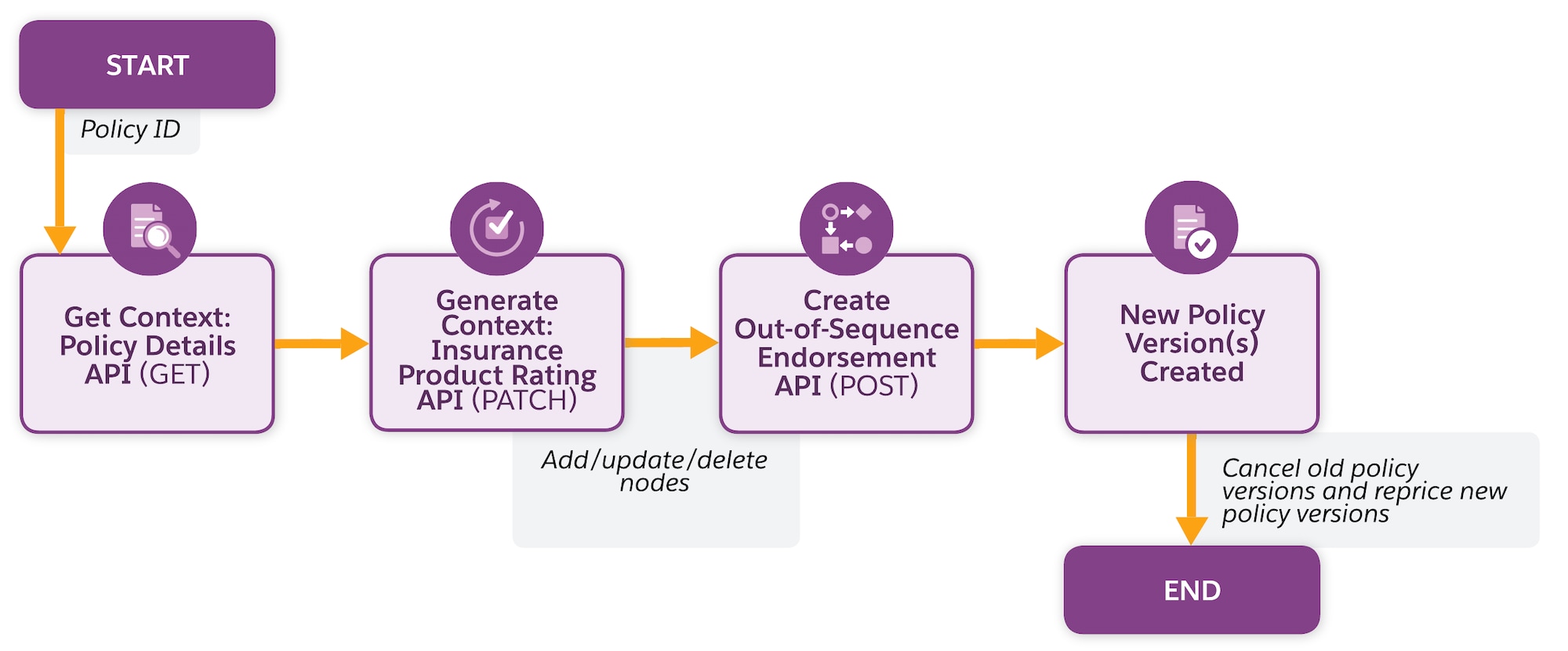
Get Policy Context—Use the policy ID to get the context either by:
Generate Price-Adjusted Context—Use the context ID and make a PATCH request on the Insurance Product Ratings Connect API.
The returned context includes updated premiums and tax details.
Submit out of sequence endorsement request—Use the retrieved context to endorse a policy either by:
Specify the policyId, contextId, effectiveDate and transaction details during the API call.
The request returns a jobIdentifier that you can use to track the async process through a custom report.
Expected Results:
j