Starting with B2C Commerce version 25.3, hybrid authentication (Hybrid Auth) replaces Plugin SLAS.
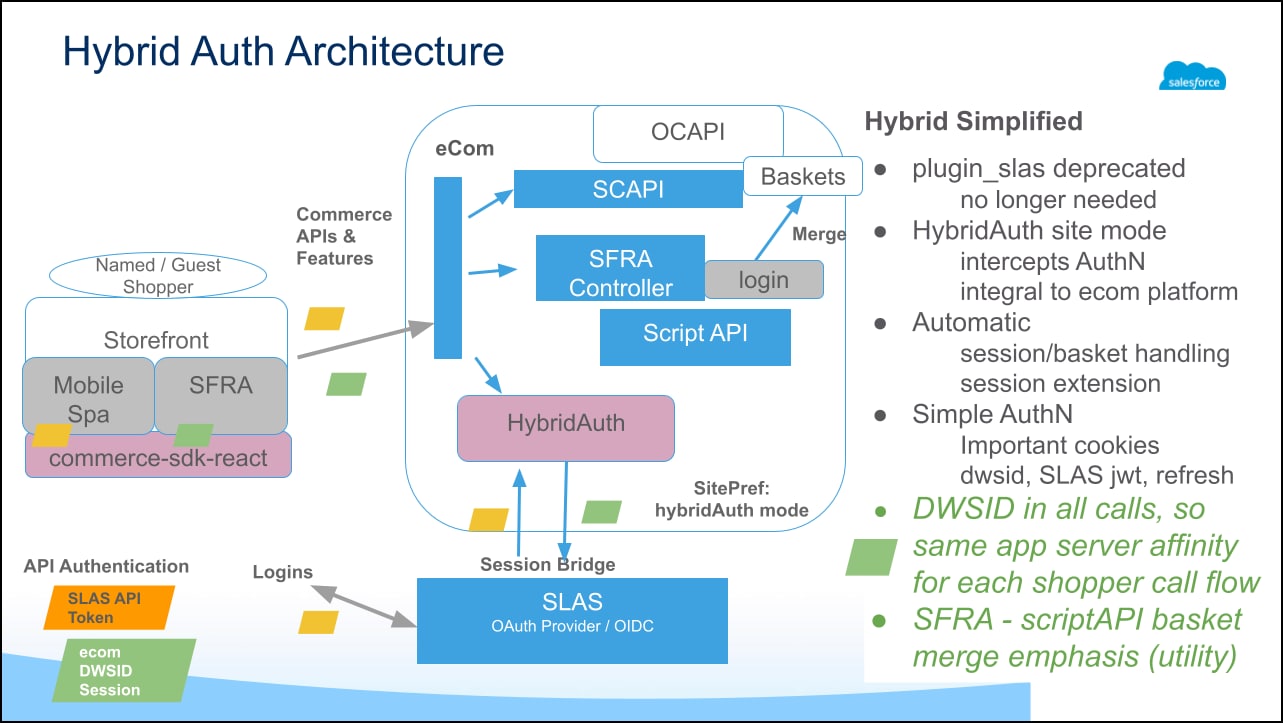
Hybrid Auth keeps SFRA/SiteGenesis session state (dwsid) and SLAS authorization state (JWT) synchronized for storefronts that span multiple runtimes. It applies to all hybrid storefront architectures: Storefront Next, PWA Kit (Composable Storefront), and SFRA/SiteGenesis.
The Shared Hybrid Auth Setup covers the architecture-neutral steps that every hybrid storefront needs. After you complete it, follow the implementation guide for your storefront architecture.
What Hybrid Auth Solves
Synchronizes shopper auth context between platform-rendered pages and headless pages
Replaces Plugin SLAS with a platform-native implementation
Enables consistent handling for Shopper Context, session extension, and Do-Not-Track (DNT) synchronization
Supports eCDN-based traffic splitting for phased headless rollouts
For non-PWA Kit headless storefronts, if you’re using Hybrid Auth and the dwsid cookie exists, include the sfdc_dwsid header with the dwsid cookie value on all SCAPI calls.
Note
Benefits
Platform-native, no Plugin SLAS: Launch faster with out-of-the-box authentication that automatically synchronizes data between SFRA/SiteGenesis and headless pages—no Plugin SLAS required.
Seamless shopper experience: Shoppers move across your hybrid site with no disruption or data loss, including synchronized Shopper Context attributes and consistent analytics.
Full support for all templates: A fully productized solution for both SFRA and SiteGenesis eases your path to Composable Storefront.


 j
j